
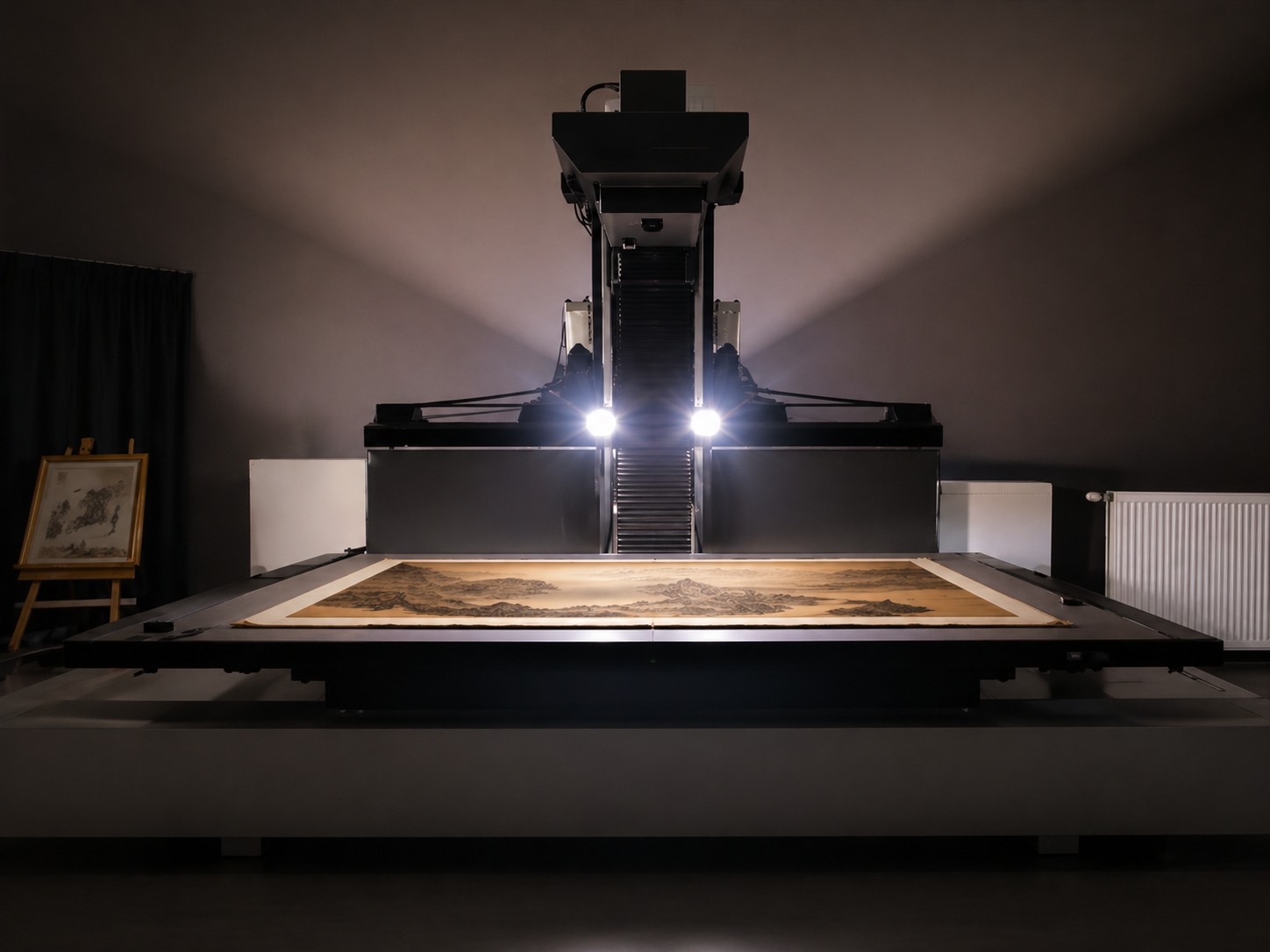
Advanced Cultural Heritage Scanning Solutions for Museums
From High-Resolution Digitization to Long-Term Preservation — Setting a New Standard for Collection Management
As museum and cultural collections continue to grow, achieving accurate digitization, long-term preservation, and efficient management has become an increasingly important priority. Advanced cultural heritage scanning technology reduces the need to handle original objects while transforming valuable collections into high-quality digital assets for research, exhibitions, publishing, and future generations.
Project Background
A cultural institution with an expanding collection sought a professional digitization solution to support long-term preservation, research accessibility, and digital collection management.
The collection included:
• Rare books and archival documents
• Calligraphy works
• Ink wash paintings
• Oil paintings
• Historical maps and manuscripts
• Framed artworks
As the collection continued to grow, the institution required a reliable system capable of preserving visual accuracy while reducing the need to handle original objects.
Challenges
Conventional photography-based digitization presented several limitations:
Inconsistent Color Reproduction
Image results often varied depending on operator technique, lighting setup, and shooting conditions.
Limited Resolution for Large Works
Oversized artworks required multiple exposures and stitching, increasing labor time and the risk of losing fine detail.
Reflection on Glazed or Framed Objects
Glass surfaces created glare and compromised image clarity.
Increased Handling Risk
Repeated movement, reframing, and repositioning increased the possibility of physical damage.
Solution
The institution implemented an advanced cultural heritage scanning system engineered in Germany and designed specifically for museums, archives, and fine art collections.
The solution provided:
• Ultra-high-resolution image capture
• Accurate and repeatable color reproduction
• Non-contact scanning workflow
• Large-format artwork digitization capability
• Consistent output for archival standards
Expected Benefits
Preservation of Fine Detail
Brushwork, craquelure, paper fibers, seals, inscriptions, and surface texture can be captured with exceptional clarity.
Museum-Grade Color Accuracy
Integrated lighting and calibration systems ensure faithful reproduction of original tones and materials.
Superior Performance for Large-Scale Works
Large paintings and documents benefit from seamless high-resolution capture without compromise.
Reduced Object Handling
A low-contact workflow minimizes unnecessary movement and helps protect fragile originals.
Creation of Long-Term Digital Assets
Digitized files can support:
• Online collection access
• Exhibition graphics and interpretation
• Scholarly research
• Publishing and print production
• Rights management and licensing
• Institutional digital archives
Client Feedback
Previous photography workflows often produced inconsistent results, even when imaging the same object multiple times.
Following implementation of the scanning system, image quality became standardized, repeatable, and aligned with professional archival expectations.
Beyond Equipment: The Real Key to Successful Digitization
Technology alone is not enough.
Successful collection digitization depends on:
• Standardized imaging workflows
• Accurate color management
• Safe object handling procedures
• Sustainable archive planning
• Practical integration for research, exhibitions, and access
With experience in cultural preservation and precision environmental control, Bossmen helps institutions move beyond equipment procurement toward fully integrated collection modernization.
- Related Product
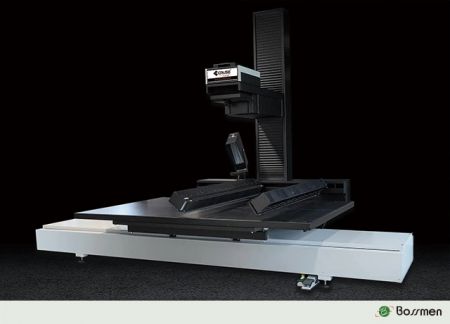
Cultural Relics Scanning Equipment
CRUSE 295ST-4.0
A high-end flatbed scanning system manufactured in Germany, specifically designed for the digitization of artworks, calligraphy, paintings, and large-format...
Details